
Student Life at the ETPI in Vilanova
The 1950s in Spain were a period of slow but significant changes, marked by a society that was beginning to wake up from a long post-war period. Vilanova i la Geltrú, despite maintaining a calm and coastal character, was no stranger to these winds of transformation. For the young people who arrived at the Escola de Pèrits Industrials, university life represented a window to new ideas and a step towards a professional future.
Mobility was a luxury for most. The Seat 600, which would motorize the country, was just beginning to make its appearance. Communications were slower and returning home every weekend was a pipe dream for many. This “island” that Vilanova represented during the nine academic months intensified the relationships between students, forced to depend on each other for support, leisure and company.
The popular culture of the time also played an important role. Radio was the queen of entertainment, broadcasting songs that spoke of young love and dreams of the future. Cinema was beginning to become popular and the Bosch, Diana or Principal theaters were filled with figures such as Brigitte Bardot or Marlon Brando, setting trends and awakening passions.
In this context, the need for a student residence was obvious. It was not just a matter of finding a place to sleep; it was a declaration of autonomy and a creative response to the limitations of the time. At a time when infrastructures for students were scarce, the ability of these young people to organize themselves and manage an agreement with a hotel demonstrates an entrepreneurial spirit and strong cohesion. Making way for La Goya
It became a microcosm of university life in the 1950s. The rooms were witnesses to late-night conversations about subjects, but also to the first concerns about the future and the confidences typical of youth. The common spaces were the scene of chess games, songs accompanied by guitars and the planning of the first outings.
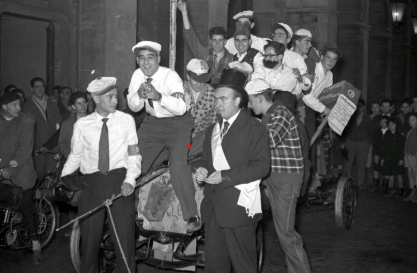
La Tuna, with its serenades and romantic air, also found one of its epicenters in La Goya. Nights of revelry and popular songs echoed through its walls, creating an atmosphere of brotherhood and celebration. These experiences, along with publications such as La Estudiantina, offer us a vivid image of an era when social life and personal relationships were fundamental pillars of the university experience.
The founding of La Goya was not only a practical act, but also a symbol of the students’ ability to build their own space and forge bonds that would go far beyond the years of study. In a historical context where individuality did not yet permeate everything, the strength of the collective and the creation of this “home away from home” were key elements in the construction of a promotion identity that endures to this day.
